How to sell gold at a pawn shop
What a shop pays for gold comes down to how much pure gold is in the piece. Know your karat and weight before you walk in, and you can compare offers like a pro.
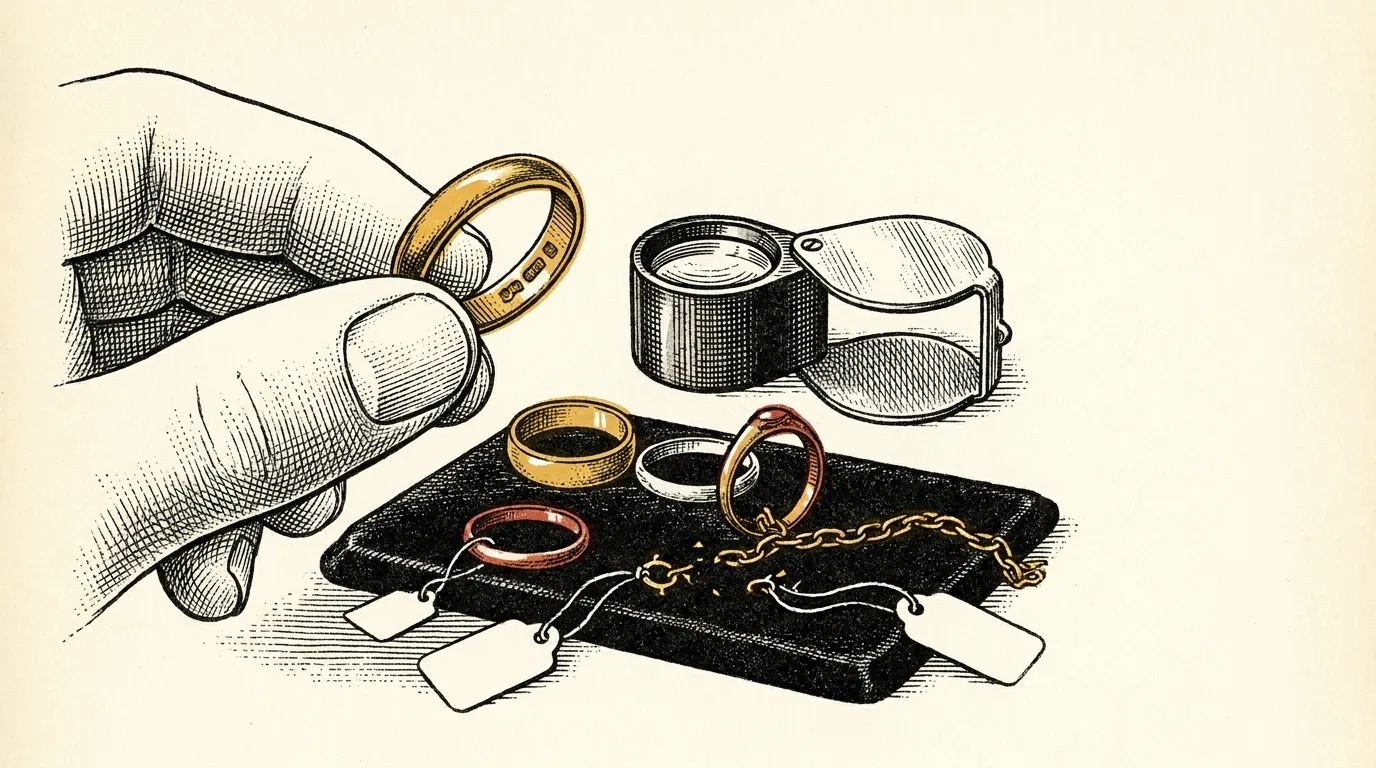
- Find the karat stamp on each piece and sort them into piles: 10K, 14K, 18K and so on.
- Set aside plated pieces and anything with stones or a designer name.
- Check the day's gold spot price so you know what the market is doing.
- Visit or call two or three shops and compare what each pays per gram for each karat.
- Bring a photo ID.
What the shop is paying for
For most gold jewelry, the shop is buying the gold itself. That means two numbers matter: how much the piece weighs and how pure the gold is. Together they tell you how much pure gold you have. The shop prices that gold against the current market price and keeps a margin for its costs and its profit.
Some pieces are worth more than their gold. A signed designer piece, a vintage piece in demand, or a ring with a good diamond may sell for more as jewelry than as scrap. More on that below.
Read the karat stamps
Gold is mixed with other metals to make it harder and to change its color. The karat (K or KT) tells you how much of it is gold, out of 24 parts. Look for a small stamp on the inside of a ring band, on a clasp, or near the end of a chain. A loupe or a phone camera zoomed in helps.
| Karat stamp | Gold content | Number stamp |
|---|---|---|
| 10K | 10 parts in 24 (about 41.7%) | 417 |
| 14K | 14 parts in 24 (about 58.3%) | 583 or 585 |
| 18K | 18 parts in 24 (75%) | 750 |
| 22K | 22 parts in 24 (about 91.7%) | 916 |
| 24K | 24 parts in 24, pure gold | 999 |
Jewelry made outside the US often uses the number stamps instead of a karat mark. White gold and rose gold are stamped the same way; the color comes from the other metals, not from less gold.
Solid, filled or plated?
Not everything gold-colored is solid gold. These marks mean the piece has only a thin layer of gold over another metal:
- GP, GEP or HGE: gold plated, gold electroplated, heavy gold electroplate
- GF, or a mark like 1/20 12K GF: gold filled, a thicker layer bonded to a base metal
- RGP: rolled gold plate
- Vermeil: gold plating over sterling silver
Plated and filled pieces contain very little gold, and many shops won't buy them for their gold. Pieces with no stamp at all aren't necessarily fake; the stamp may have worn off or been removed when a ring was resized. The shop can test them.
Weight: grams and pennyweight
Shops weigh gold on a jeweler's scale, usually in grams. Some use pennyweight (dwt), an old jeweler's unit: one pennyweight is about 1.555 grams. Gold market prices are quoted per troy ounce, which is about 31.1 grams, a little heavier than a regular ounce.
Ask which unit the shop is using so you can compare offers fairly. A kitchen scale won't be precise enough to check a small ring, but it can give you a rough idea of a heavy chain.
The spot price
The spot price is the market price for one troy ounce of pure gold, right now. It changes throughout the day on trading markets, and you can look it up on any financial news site. Pawn shops base their gold offers on it, then pay less than the full spot value to cover testing, refining and their margin.
You don't need to calculate an exact number, and we don't quote what shops pay, because it changes daily and differs by shop. The spot price helps you in two ways: it tells you whether gold is up or down this week, and it lets you see whether one shop's offer is in line with another's.
Melt value vs resale value
Melt value is what the gold in a piece is worth on its own. Scrap and broken jewelry is usually bought on this basis. Resale value is what a piece could sell for as jewelry, in the shop's case or online. For most plain chains and bands, the two are close. For some pieces, resale value is higher:
- signed pieces from well-known jewelry houses
- rings and earrings with good diamonds or gemstones
- vintage and antique pieces that collectors look for
- gold watches, where the movement and brand matter
If you have a piece like this, ask the shop whether it is pricing it by weight or as jewelry, and whether it will value the stones separately. Bring any certificate, appraisal or receipt you have.
How shops test gold
Expect the shop to check your gold in front of you. Common methods are an acid test (a small scratch on a test stone and a drop of acid), an electronic gold tester, or an X-ray fluorescence (XRF) analyzer that reads the metal without marking it. It's reasonable to ask which method they use and to watch.
Sort by karat and get several offers
Never hand over a mixed bag. If 10K, 14K and 18K pieces are weighed together and priced as one lot, you risk being paid the lowest rate for all of it. Sort your pieces by karat at home, and ask the shop to weigh and price each pile separately.
Then compare. The easiest way is to ask each shop the same question: what do you pay per gram for 14K today? (and the same for each karat you have). Offers vary from shop to shop and day to day. Write them down, and remember you don't have to accept the first one.
- A scale you can't see, or one that isn't zeroed before weighing.
- Pressure to decide on the spot.
- A single price for a mixed pile without a karat-by-karat breakdown.
- Stones removed or not mentioned when they could add value.
What to bring
- A valid photo ID. Shops record who sells gold.
- Your pieces, sorted by karat, with plated items set aside.
- Paperwork for diamonds, watches or designer pieces: certificates, appraisals, receipts, boxes.
Pawn it instead?
If you'd like to keep the piece and only need cash for a short time, you can pawn gold instead of selling it. The loan offer will usually be lower than a sale offer, and you'll pay fees to get it back. Read pawn or sell? and how pawn loans work first.
Find a pawn shop that buys gold
2,830 of the 6,288 pawn shops in this directory (45%) buy gold and jewelry, going by a customer review that describes selling or pawning gold there (1,613 shops) or the shop's own website (1,746). Each one's proof is shown on its listing, so you can see what customers say before you go.
Quick answers
- How much do pawn shops pay for gold?
- It depends on the gold content of your piece (its weight and karat), the day's gold price and the shop's margin. Shops set their own prices, so ask each shop what it pays per gram for your karat and compare.
- Is 10K gold worth selling?
- 10K gold is 10 parts gold in 24, so it holds less gold per gram than 14K or 18K, but it is still real gold and pawn shops buy it. Keep it separate from higher karats so it is weighed and priced on its own.
- Do pawn shops buy gold-plated jewelry?
- Usually not for its gold. Plating is a very thin layer over another metal. Marks such as GP, GEP, HGE, RGP or GF mean plated or filled, not solid gold.
- What do I need to sell gold at a pawn shop?
- A valid photo ID, your pieces sorted by karat, and any certificates or receipts for diamonds, watches or designer jewelry.
General information, not financial or legal advice. Pawn loan terms, fees and rules vary by state and by shop; ask the shop for its terms in writing.